Decoding liver cancer
at every scale.
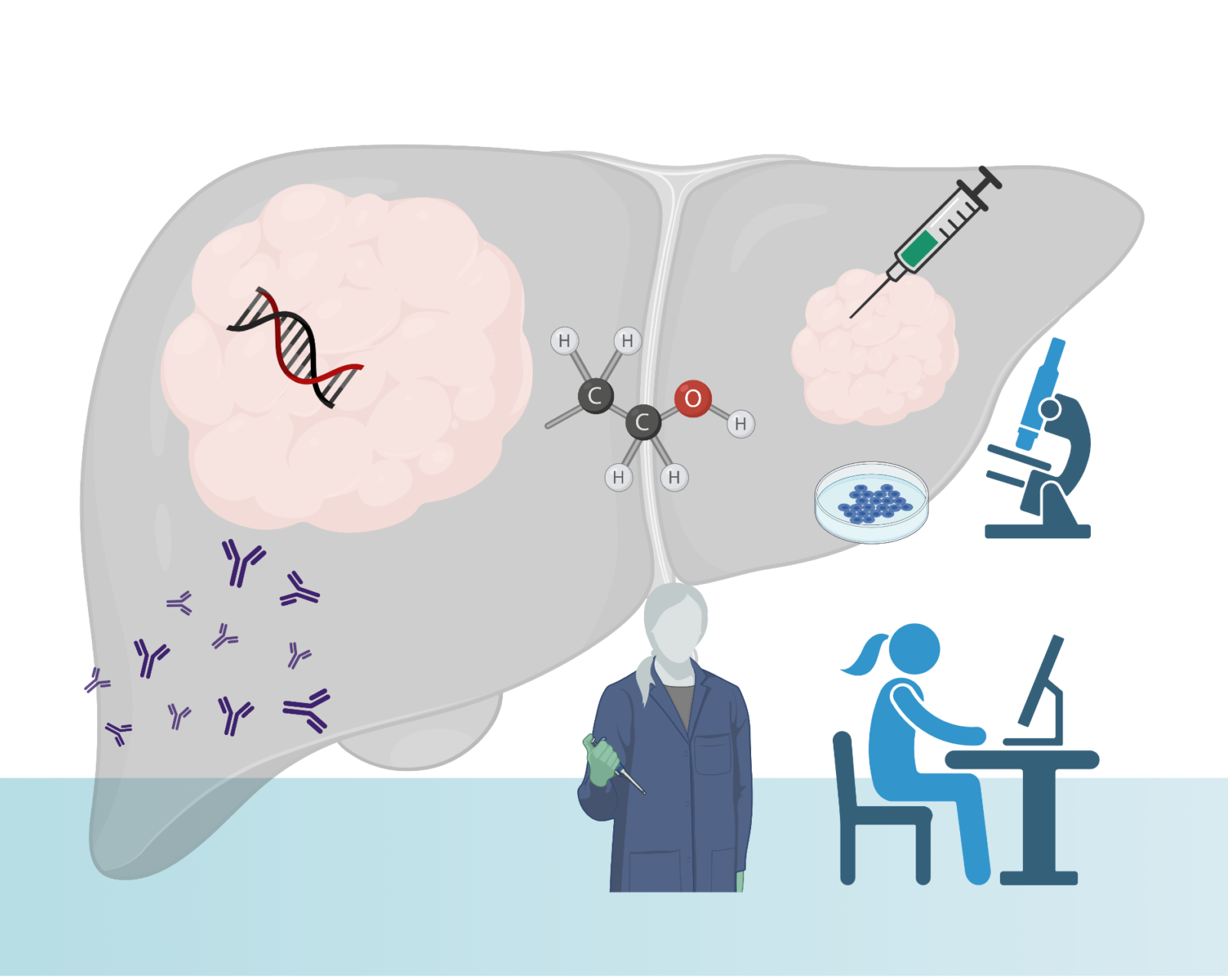
We combine spatial biology, single-cell genomics, and patient-derived models to understand how liver cancer arises, evades treatment, and can be stopped.
Understanding the complex interplay
of cancer and chronic liver disease.
Liver cancer remains a devastating disease with poor survival outcomes, often arising in the setting of cirrhosis. The coexistence of chronic liver disease and cancer creates unique biological challenges that influence tumor progression and therapeutic response. Our research is driven by the need to understand this complex interplay at a mechanistic level to develop more effective treatment strategies.
We focus on identifying immune mechanisms that enable tumor persistence and recurrence, particularly in the setting of minimal residual disease following treatment. By studying how immune cells — especially macrophages — interact with tumor cells and contribute to therapy resistance, we aim to develop neoadjuvant strategies that eliminate residual cancer cells and prevent recurrence.
Looking ahead, our lab is expanding efforts to reprogram macrophages to enhance both innate and adaptive immunity against liver cancer. We are mapping spatial interactions within the tumor microenvironment to identify novel therapeutic targets that can disrupt immune evasion and metastasis. In parallel, we are improving mouse and patient-derived models to better translate preclinical discoveries into real-world therapies.
Ultimately, our goal is to develop more effective and personalized treatment strategies that not only extend survival but also improve quality of life for patients facing the dual burden of liver cancer and cirrhosis.
Research Projects

Determining how MASH
Progresses to HCC
Metabolic dysfunction associated steatohepatitis (MASH) or fatty liver disease is an increasingly common precursor to hepatocellular carcinoma (HCC), yet the mechanisms driving this transition remain poorly understood.
- Investigate how chronic inflammation and fibrosis in MASH create a tumor-promoting microenvironment
- Define the role of immune and stromal interactions in driving malignant transformation
- Identify biomarkers that can predict patients at highest risk of progressing from MASH to HCC, enabling earlier intervention

Preventing Cancer Recurrence by
Targeting Minimal Residual Disease
A major challenge in liver cancer treatment is the persistence of minimal residual disease (MRD) following surgery or locoregional therapies, leading to recurrence.
- Unravel how immune cells protect residual tumor cells from elimination
- Develop neoadjuvant therapeutic strategies that can eliminate MRD before curative treatments
- Explore immune-based and targeted approaches to sustain long-term remission and prevent recurrence

Dissecting Tumor Heterogeneity and
Immune Evasion in Human HCC
HCC exhibits high inter- and intra-tumoral heterogeneity, making it resistant to standard therapies. We use cutting-edge spatial and single-cell technologies to map the tumor microenvironment at unprecedented resolution.
- Map spatial interactions between tumor subclones, macrophages, and other immune cells within the tumor microenvironment
- Identify how tumor heterogeneity contributes to immune evasion and therapy resistance
- Use single-cell and spatial transcriptomics to uncover novel therapeutic targets for disrupting adaptive resistance mechanisms